
Zero to 11,000 feet to the belly button and down and down. Lima is at sea level. Cuzco is 11,000. For the Incas, for which Cuzco was the center of the empire that stretched from Colombia to Argentina/Chile, Cuzco was also the belly button of the governing structure.
Too much, too fast, is not our norm. But it was this time. We were both knocked by the altitude change. It didn’t help us any to have multiple Pisco Sours to celebrate our last night in Lima. We were told: ” have one, carefully have two….”. Well, we didn’t stop there.
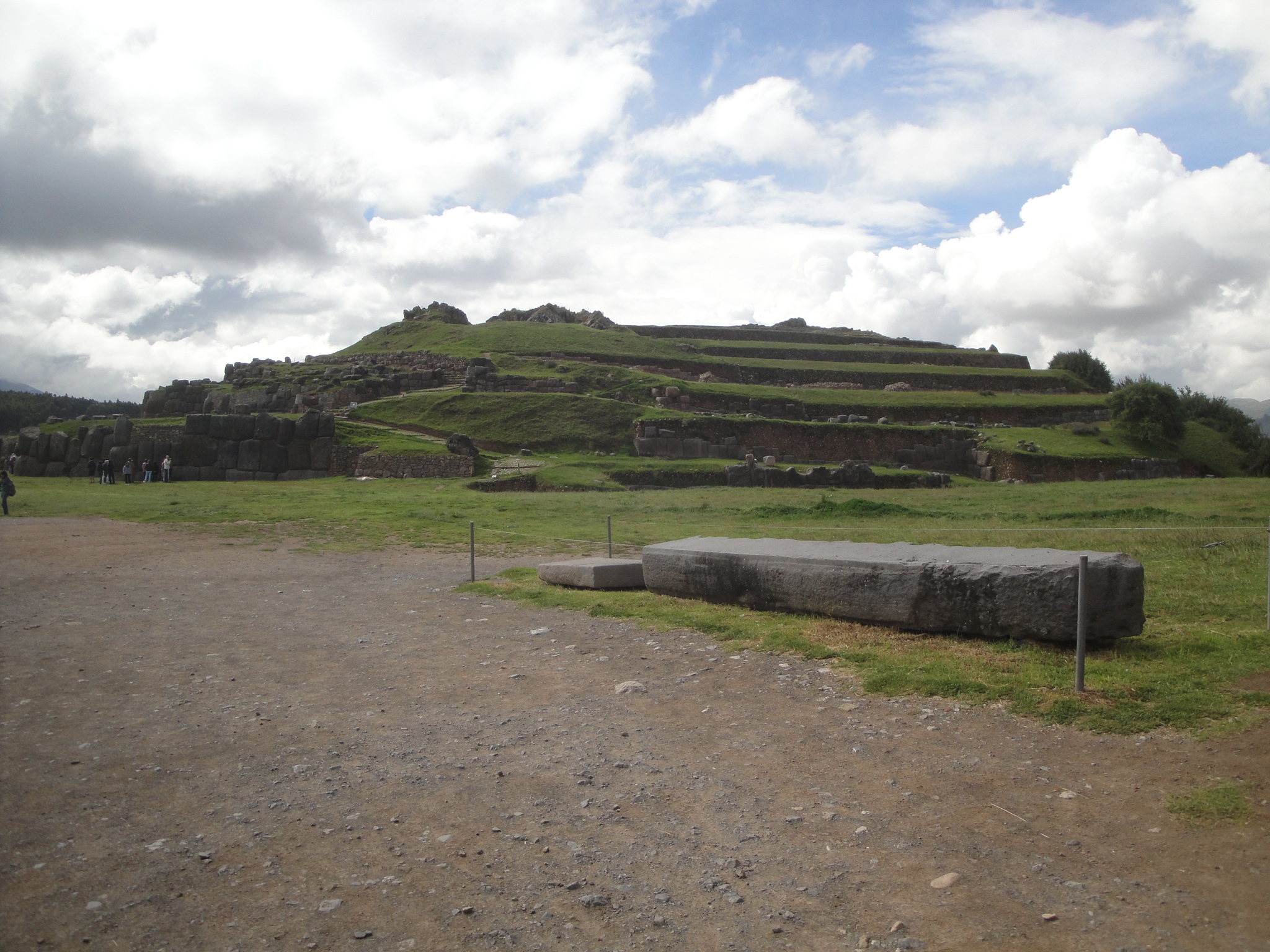
So far Cuzco is our favorite city. Still retains foundations of the famous Incan stonework of multi-ton rocks perched on top of each other without mortar. Little more than the foundations survive because it was standard operating procedure throughout the Spanish empire to disenfranchise and dispirit their subjects by destroying their histories.
Here in Cuzco, they built a Spanish palace/government building literally on top of the remains of the house of the last emperor and the obligatory cathedral on top of the Incan Temple to the Sun God.
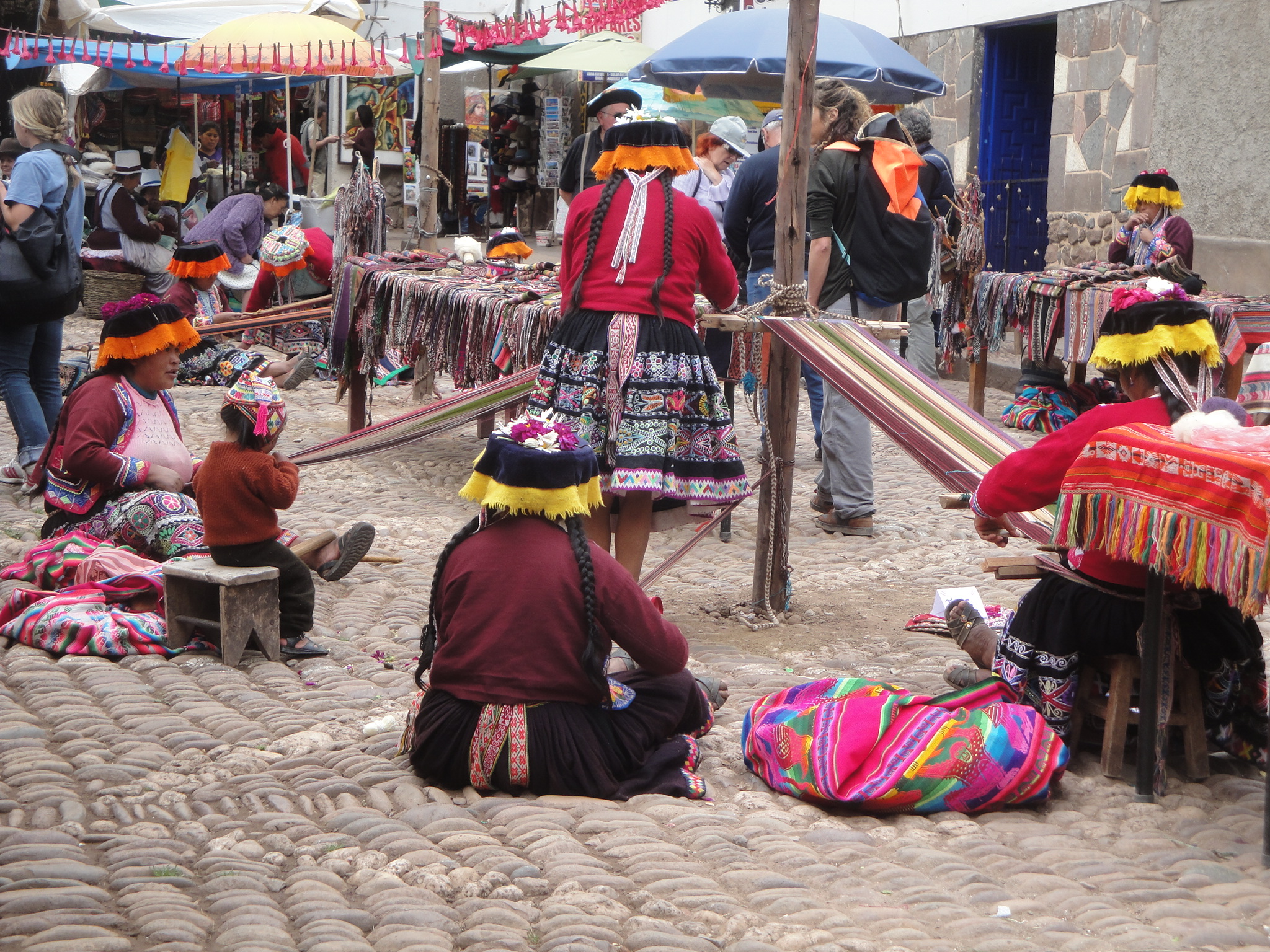
Unlike all of the other cities so far, Cuzco has no high rises. The tallest building that I have seen so far is three stories. The ancient architecture and narrow cobblestone streets (a wide street might be 30 feet, many are less than 20) survived the modernization programs of the 1960-1980 period and, as far as I can tell, it was and remains a point of civic and popular pride that the city (pop = 400,000) has the charm and character that has survived.
Lima, on the other hand, with 9 million people cannot say the same. We didn’t see very much of Lima (how could we–it is so huge!) but what historical character we could see is sandwiched between high rises. According to the people that we talked to, development decisions are in the hands of “mayors” similar to our city council types except, and it is a critically important exception– the mayors can make a decision to allow a developer to knock down an historical structure and replace it with a glass and steel high rise. An open invitation to corruption.
Ollantaytambo is a marvelous pre-Colombian city at the head of the Sacred Valley which we travelled to today. We hiked to the top of the Temple of the Sun (sounds like an Indiana Jones movie script)…. I grew up fascinated by the Incan people, the Mayans, the Aztecs, etc., I thought that I knew at least a little about them. Not surprisingly (now) the stereotypes vastly understate or under-represent these extraordinary people. Whatever I thought I knew about their engineering, astronomy, architecture, agriculture, and spiritual beliefs (condor represents the upper region/heaven, cougar/puma represents the region where we live today, and the snake represents the under world in a complex system centered on the natural world and our place in it), I actually knew next to nothing.
Today, I know a little more. Today, I know I could spend much more time in the museums, ruins, art, performances, and every-day products, and still only scratch the interconnected surfaces.
I could choose at this moment to launch on the role of the Spanish and their belief system(s)–only partly reflected in the colluding Catholic church–not only in destroying all of this throughout the Americas and the Pacific but also in destroying any ability at all to ever really understand it and learn from it. I could indulge in the collusion between a small bunch of thugs and the church that gave them higher authority to commit the crimes against humanity that they committed. But let’s not go there right now.
Instead, let’s think about what it took to bring this level of sophistication to a vast region that had no horses, wheels, work animals, iron, etc. Oh yeah, and no written language.
The understanding of mathematics, physics, geology, etc. (whether inspired by their own divinities or not) required and communications skills required to transmit the knowledge over thousands of miles (the Inkas built approximately 18,000 miles of roads through some of the highest mountains in the world) and through many generations of builders (again with no written language) is one of the few things in the world that is truly mind blowing.
We will be posting photos of the many, many, marvels that we have seen which so far are only preparatory to arriving at Macchu Picchu. By the way, the latest we hear is that Macchu Picchu was simply one of the Inkan’s agricultural research stations….. Along with everything else, the Inkan’s were incredible innovators and inventors–and as simulators of other culture’s technologies. They made huge investments in research and development, Macchu Picchu being just one of many astounding examples.



 thebunguycord