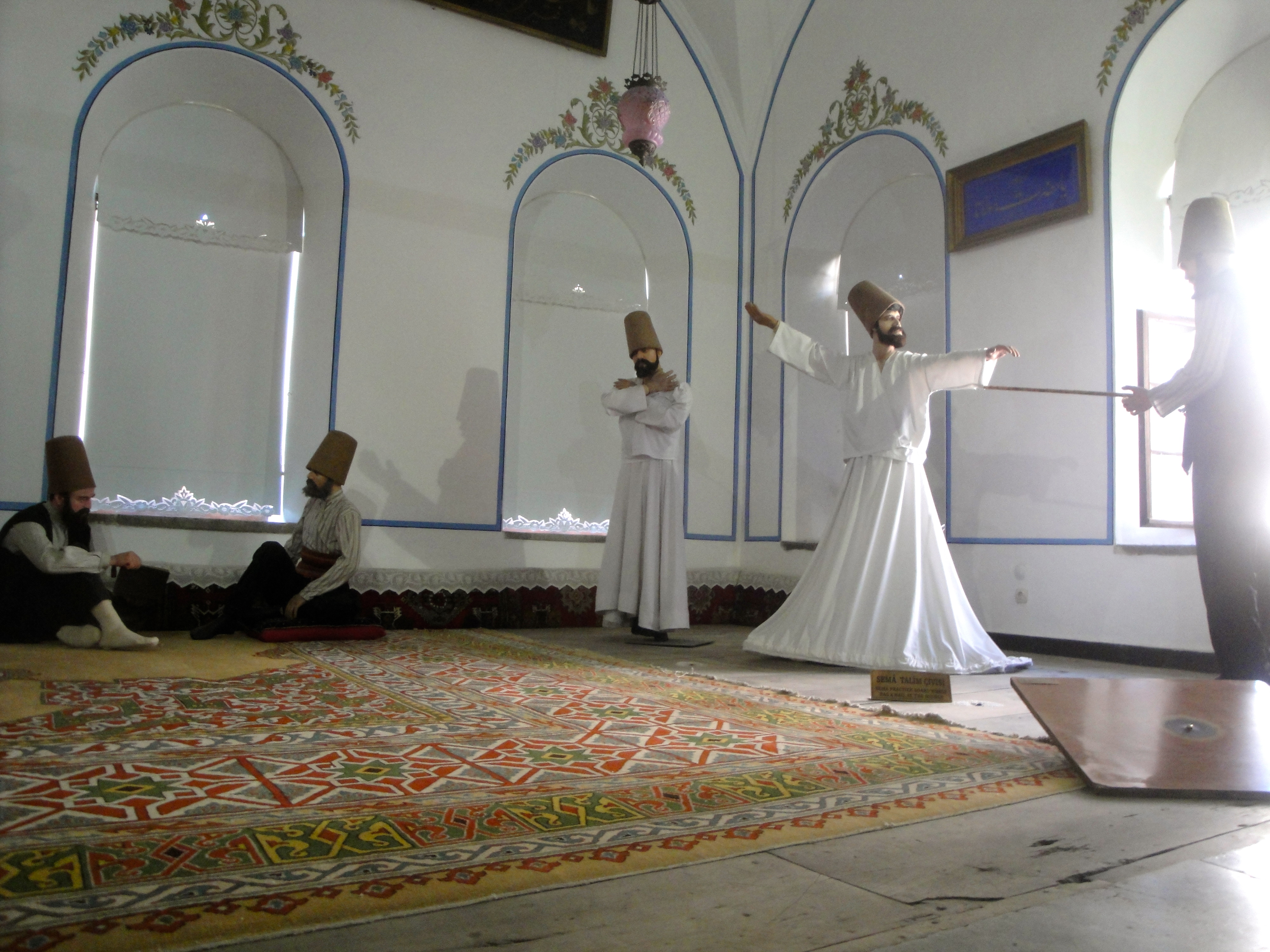
Life-like models of a Whirling Dervish in mid-session at the Mevlani monastery (which is now a museum). Posted on August 12, 2012 by thebunguycord Reply
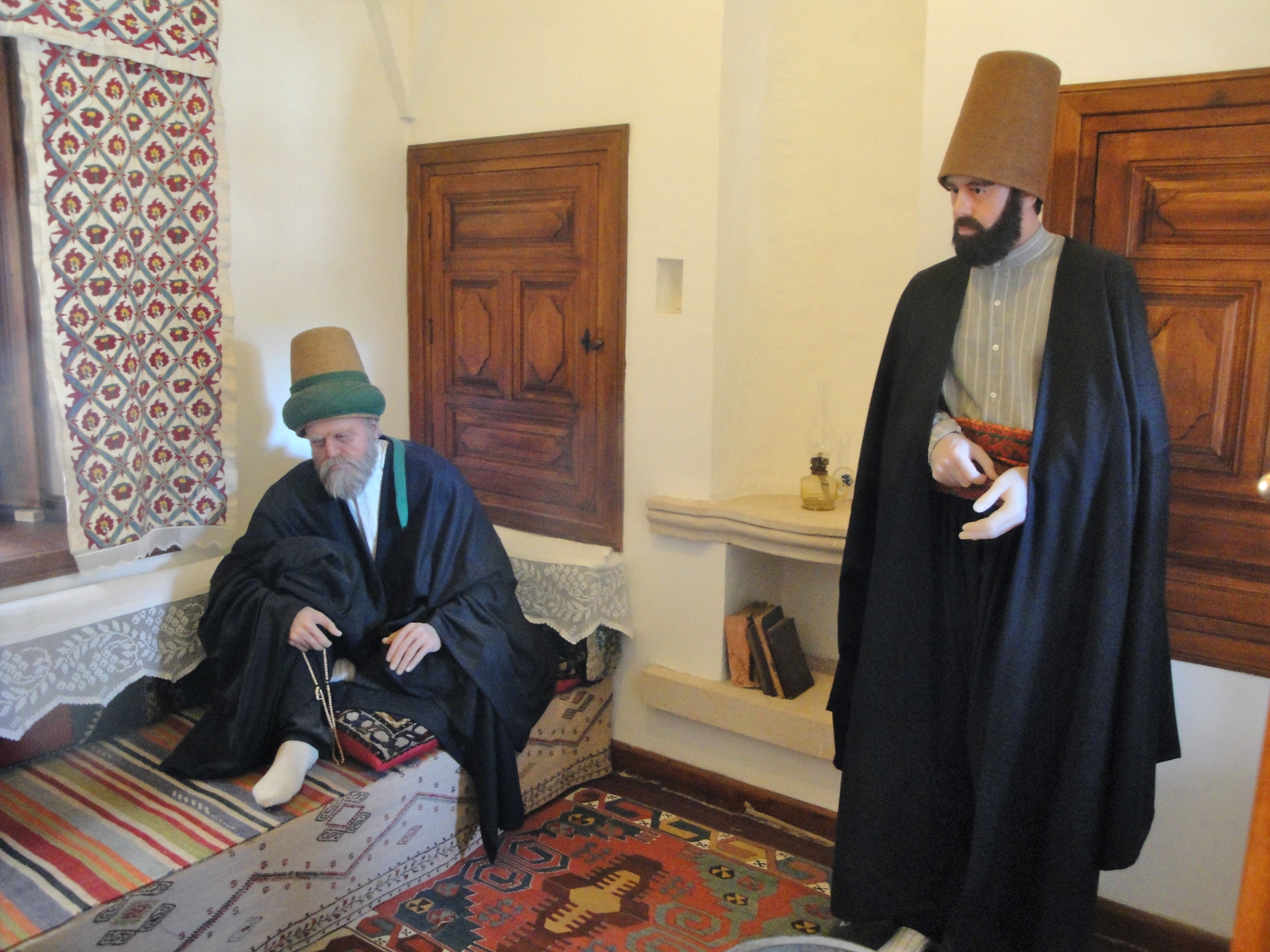
Dervishes in the dormatory of one of the high ranking Mevlani quarters in the Mevlani monastery which is now a museum in Konya (the figures are life like models). Posted on August 12, 2012 by thebunguycord Reply
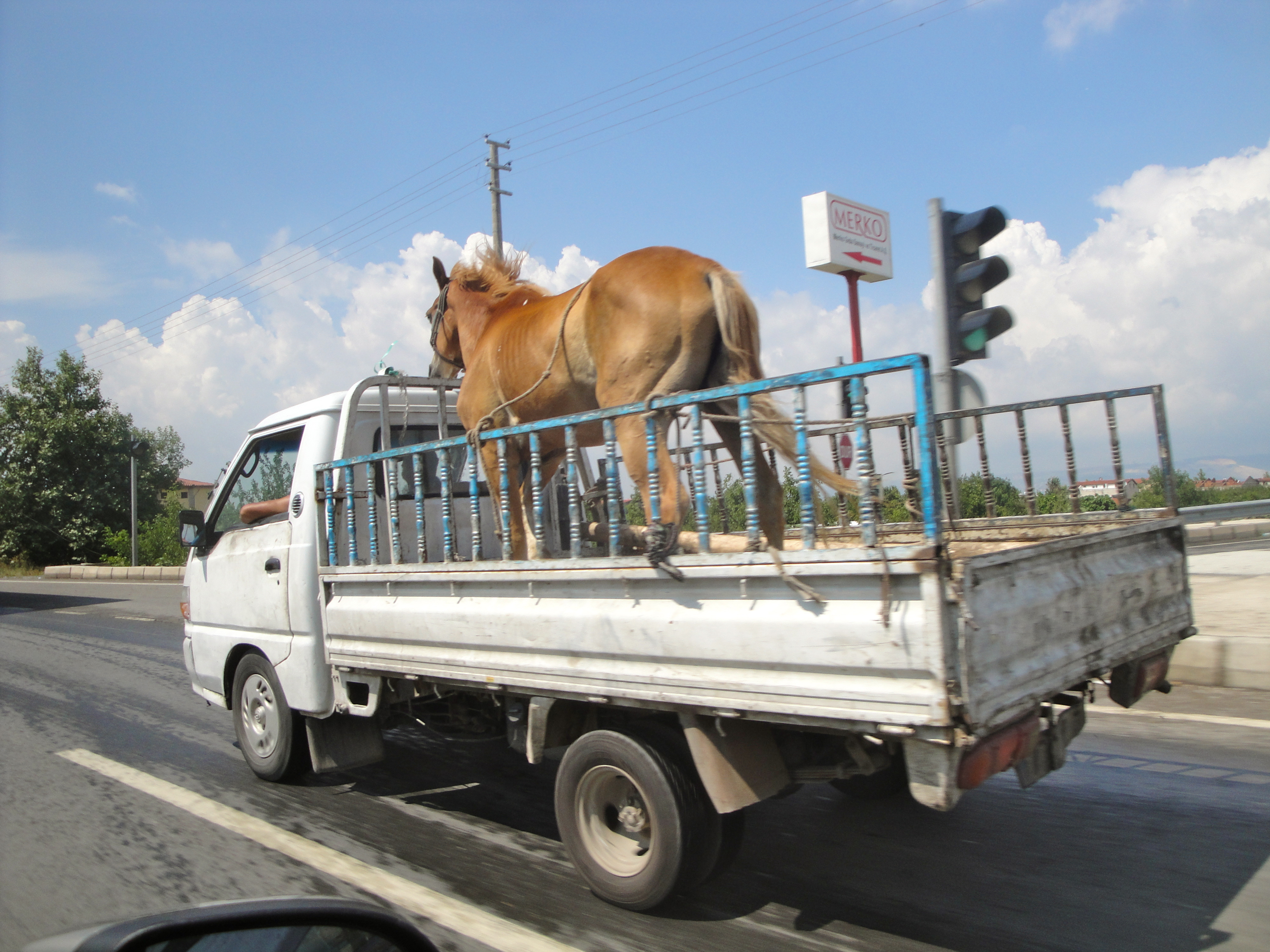
Poor thing…. Bunny doesn’t think much of the way the Turkish treat their horses…… Posted on August 12, 2012 by thebunguycord Reply
Cappadocia: “Land of Beautiful Horses” is the meaning of the word. When the area was ruled by the Persians, the taxes by local residents to the Persians were paid with horses. Apparently, the horses were appreciated….. Does anyone remember the ant farm craze of the 1960-70s? Remember those double-sided glass miniature fish aquaria filled with dirt and full of black ants making tunnels everywhere? I don’t know where that craze went but the Cappadocia Caves region in central-western Turkey rival them as only a human endeavor could. Cappadocia was one of the most anticipated regions in Turkey for me (in an already long list) and it surpassed all of my imaginings. Kaymakli….. Underground cities, I thought that there was one underground city extending some 12-16 levels (they don’t know how deep actually due to safety concerns and cave-ins). We have learned that there are 36 of them, some perhaps connected to each other by kilometers of additional tunnels (although this has not been proven). These human-ant colonies are thought to have been built as a place to hide entire communities when dangerous armies approached. So, a labyrinth of animal quarters, places of worship (Christian and pagan), workshops, cooking areas, and of course living quarters have all been dug by hand into the underground rock. Sometimes the “facilities” are connected with tunnels so small you almost have to crawl (conjecture is that these were so small for defensive purposes—no invading soldier could defend himself or fight crawling through here), and in other cases spaces wide enough for 30-40 people to stand or sit and share a meal. It is estimated that the largest could accommodate thousands of people at a time for maybe a week—long enough from the threat to pass. There are water wells, ventilation shafts, and small entrance holes all carefully hidden on the surface—except for today’s openings large enough to permit many tourists to pass. The theory is that look-outs perched on hills could alert the community early enough for them all to crawl inside with their pets, draft animals, sheep, etc., and hide until the enemy passed. Tiny ventilation shafts not only provided air but evidence of whether the sun was shining or whether it was night time. The theory suggests that fires were limited to nighttime so that the smoke would not be visible. This theory would hold that they were used by Christians hiding out from their various persecutors over the centuries. Then, when Christianity became the official religion of the Roman empire, the underground cities were no longer needed and fell into disuse. Gradually they were emptied of their human contents and then fell into forgotten history—until a local resident blundered into one when he was expanding his house and basement. They are still being discovered and they are still being explored. Another theory is that they were originally mine shafts. In this theory, once the mining activity slowed or stopped, they became comfortable places to retreat from the scorching summer heat and frigid winter cold. At a constant underground temperature of approximately 65 degrees, it would certainly have been more comfortable than the 100+ temperature or the 0 temperature on the surface. No one knows. No one knows even how old they are. Supposedly when found, they were empty of almost any sign of human activity: no tools, no furniture, no pottery, no wall paintings or decoration, nothing. While it is far more mundane, I think the old mine shaft theory is more credible for several reasons: (a) invaders, certainly the Romans (who were patient and thorough conquerors), would not have ventured into the caves looking for their victims. They would have realized that they didn’t need to. They would have simply sealed the caves, left a small custodian army, and starved them out or starved them in place, capturing or killing those who emerged from the small caves as they came out. (b) invaders might not have seen the smoke at night but they certainly would have smelled it. This would have prompted the invaders’ curiosity until they found the source(s) of the smoke and then they’d proceed to (a). For the most part the local community and the government have done a fairly good job of protecting and maintaining these incredible resources from the thousands of tourists who climb in and around them all year long. On the one hand, they are very accessible and, on the other, the accessibility is causing visible wear and other impacts both in the caves and the Sand Castles. In the underground cities they have done a pretty good job of protecting the floors from the thousands of feet that pass over them every day. Other interesting impacts are also occurring. In some of the photos you may see green stuff growing around the light fixtures. It appears that just enough of the right light spectrum is given off of the lights to produce a photosynthetic response from tiny, tiny, green organisms which are now growing on the cave walls just around the light fixtures. Then there are the Sand Castles or “Fairy Castles” as the locals call them. Reportedly more than 200 of these dwellings, churches, monasteries, etc., carved into dome shaped rocks. The entrances are generally not visible, nondescript, little holes in the rocks and open after one is inside. They seem to be everywhere and cover a much larger geographic area than I expected. Some are small, only a small living quarters or a small church (painted as they are with original, amazing quality and condition iconography). Some seem to go on for hundreds of feet with shafts, rooms, worship facilities, and dining halls, etc. Reportedly, the “monastery” shown here was scouted and proposed by Lucas’ team for the Star Wars village. The locals turned him down. No known reason. Posted on August 12, 2012 by thebunguycord Reply
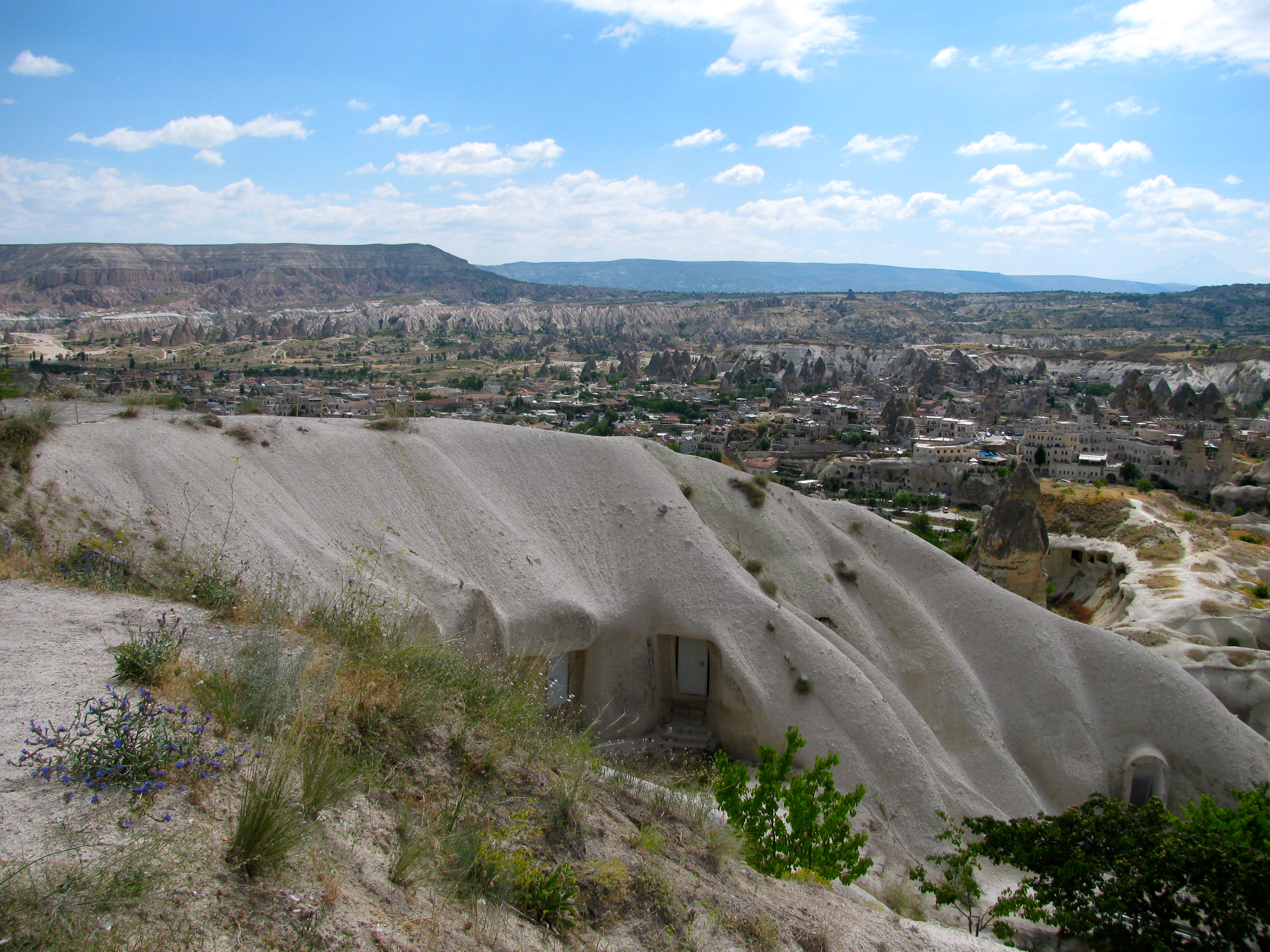
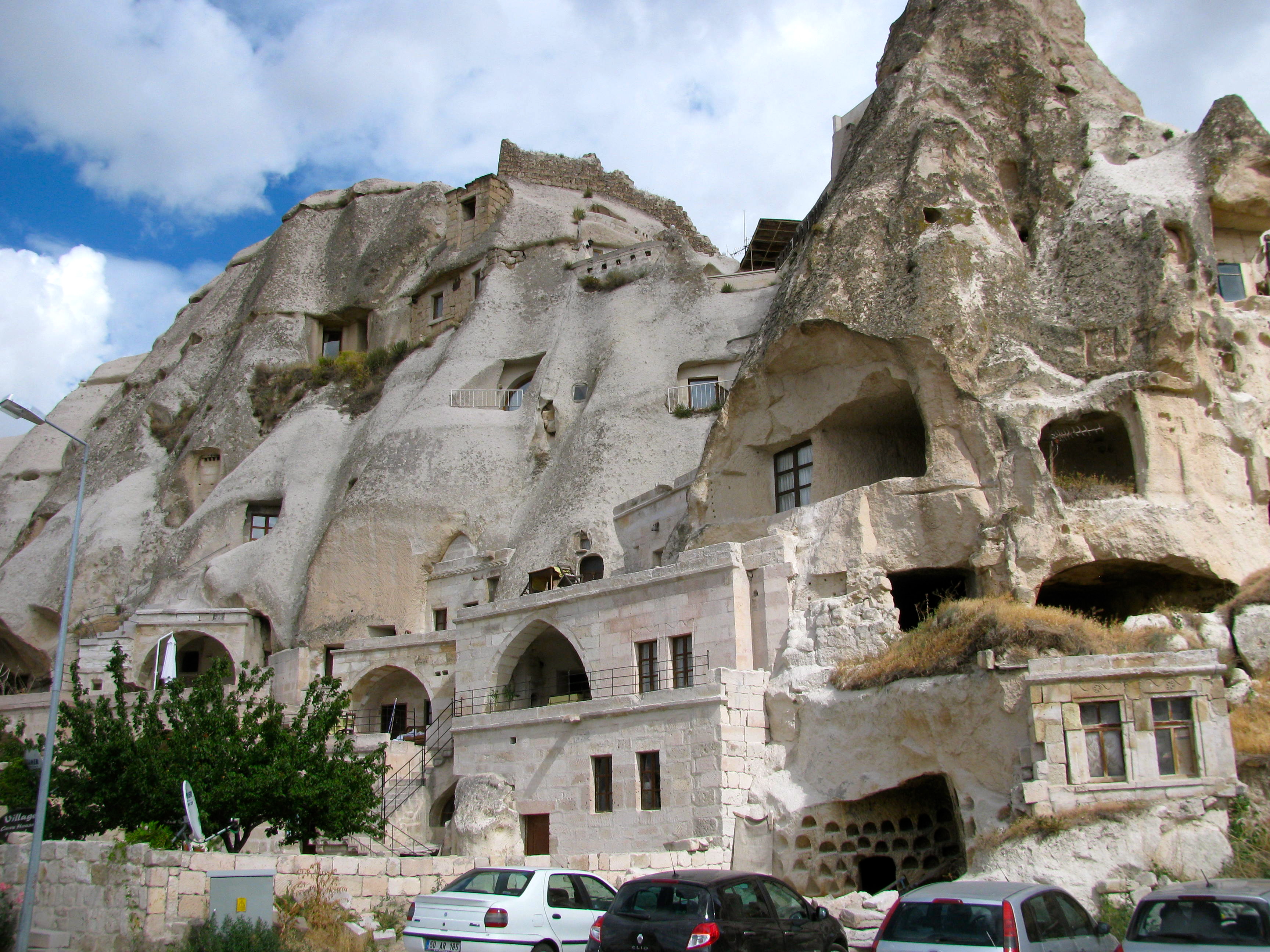
The view of Goreme from the cliffs above the city/village. The hills are alive with cave dwellings. Posted on August 10, 2012 by thebunguycord Reply
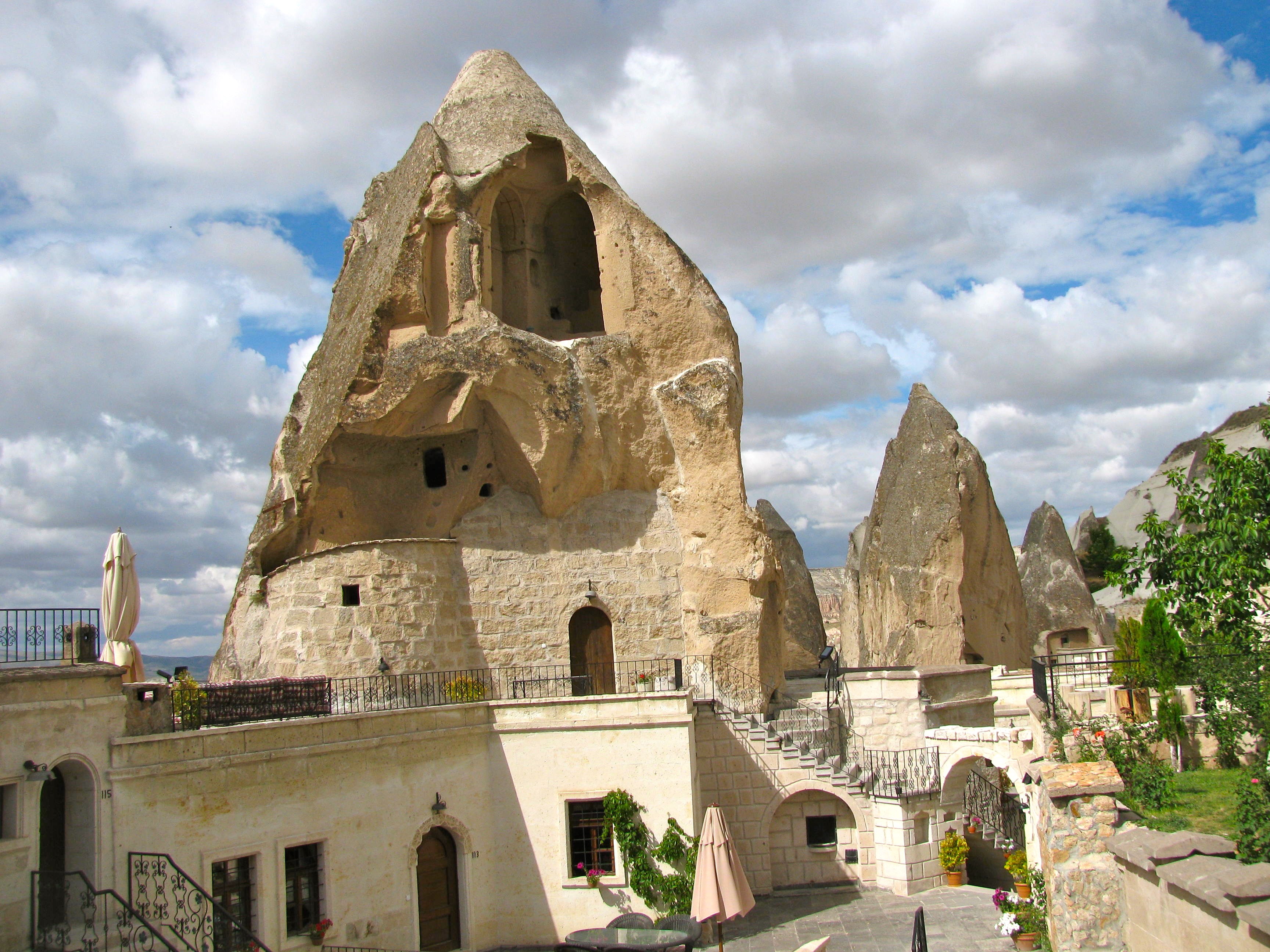
The courtyard at our hotel, Cappadoccia Cave Suites. Our room/suite/cave is off camera to the left. Posted on August 10, 2012 by thebunguycord Reply
The view from the front door of our hotel: “Cappadocia Cave Suites” in Goreme. Posted on August 10, 2012 by thebunguycord Reply
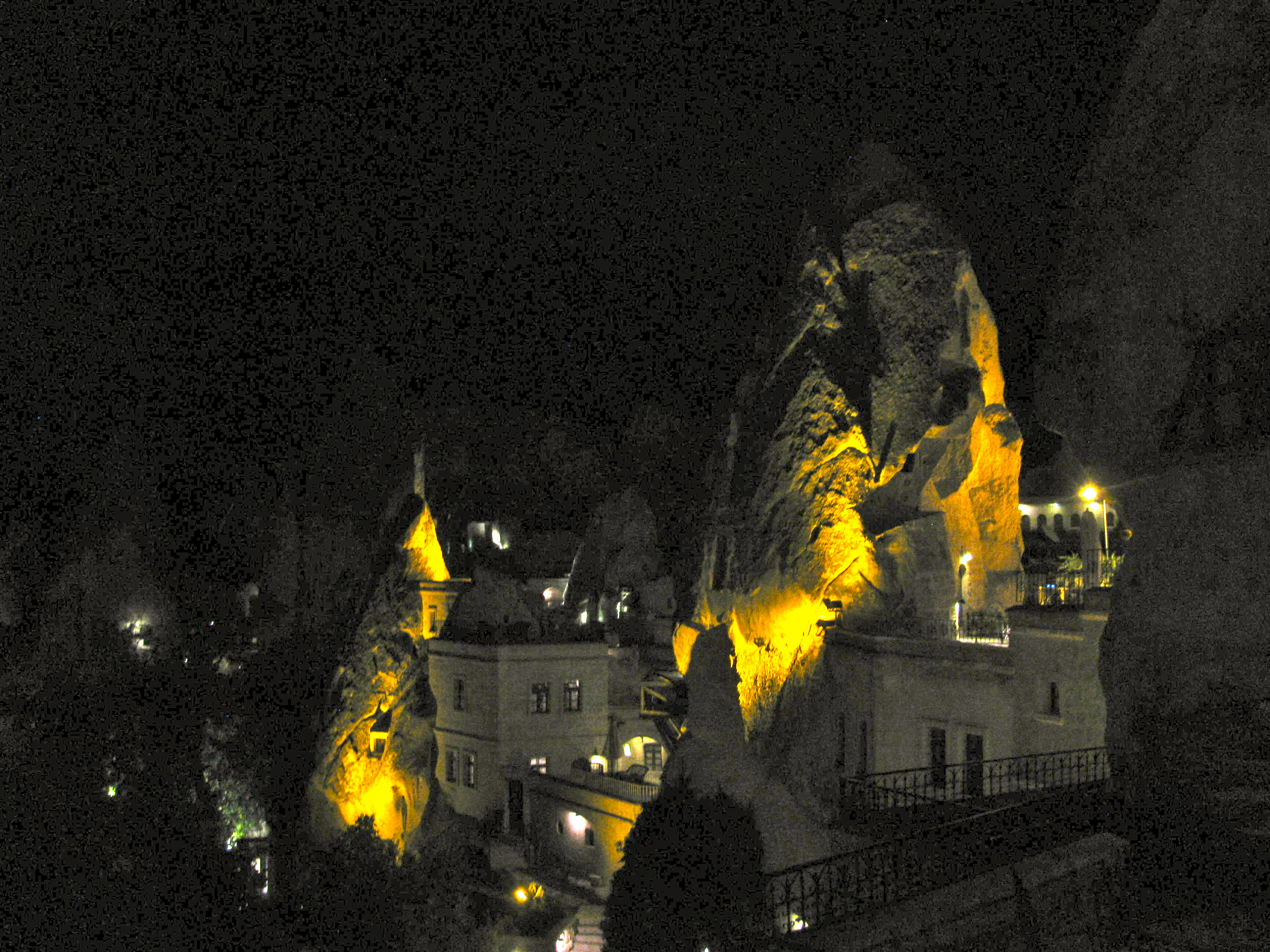
Goreme at night from the deck outside our deluxe room in a cave. Posted on August 10, 2012 by thebunguycord Reply
Derinkuyu—the first underground city that we visited in Cappadoccia. Amazing, whatever its story is. And there are a number of theories about these vast and numerous underground cities that pre-date Christianity—although they were used by early Christians to hide from persecution and invaders for centuries. It is generally thought that they were dug for whole villages to hide for brief periods of time while invading armies passed through their village or neighborhood. Short stays of days or a couple of weeks, no longer. No one knows for sure (because of cave-ins and safety concerns) but they extend 12-16 floors underground. There are also theories about how some of them are interconnected—going from one village to another but this has not been proven—no connecting tunnels have thus far been found. They were equipped with churches, dining areas, sleeping areas, areas for livestock, wineries, food stores, etc. Workshops included areas for blacksmiths, potteries, etc. Of course this is all speculation but that is what the students of the cities have come up with. Derinkuyu is perhaps the largest of them and is thought to be large enough to have accommodated 10,000 people for a few days until the invaders would have passed. After Christianity became legal as the official religion of Rome in about 300 A.D., the cities gradually were abandoned and forgotten about—until a local resident discovered Derinkuyu in the 1960s when he was digging a basement for the home that he was enlarging. Posted on August 10, 2012 by thebunguycord Reply
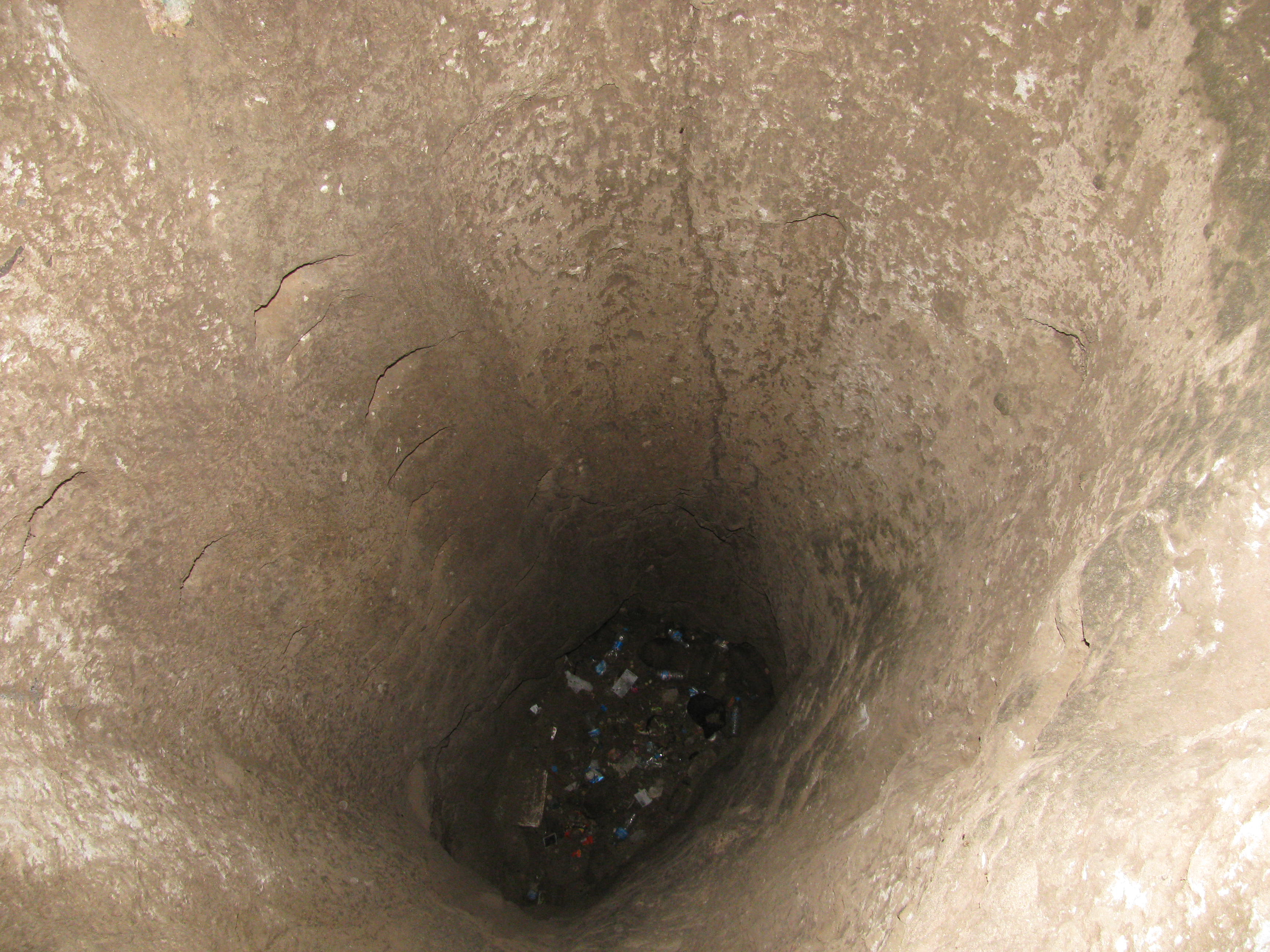
Here is the former well of the former occupants. Notice the hand-cut hand-holds along the sides of the well. Notice also that contemporary passers-through could not resist throwing their contemporary plastic bottles and aluminum cans into the well. Posted on August 10, 2012 by thebunguycord Reply

 thebunguycord