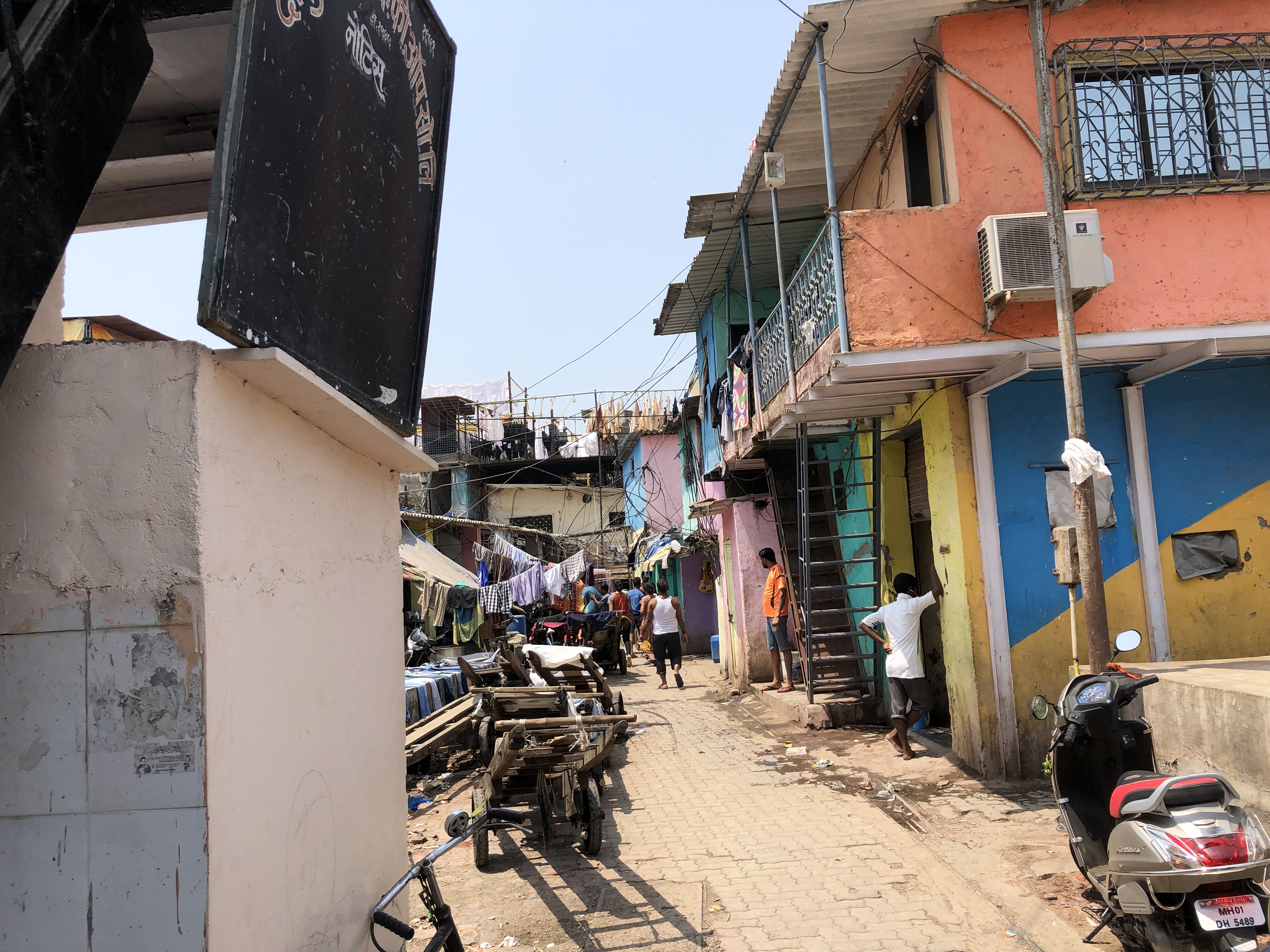
What is progress? Mumbai’s population is approximately 25 million, plus or minus 3 million, depending on how one counts the uncounted immigration (sound familiar?). Of those, the semi-official population of below-the-poverty-line adds up to 30%, plus or minus. The below the line threshold is approximately those earning US$90/month or less. They live in slums scattered throughout the city, including at the foot of high rise, high price (tens of millions of US$), residential buildings. For decades, government policy has been to eradicate the slums. Various ideas about “how” have been tried—mainly amounting to displacing them, not eliminating poverty. That said, the low incomes in Mumbai are still about twice the rural average, so in-migration continues and the poverty problem gets larger even if not more serious. So previous attempts at progress to eradicate the slums have not worked. The slums have just become older, more worn-out, and more dense with humanity. So, progress this time is measured by painting the slum “houses” in shades of pink, blue, and red. First priority includes those fronting on main—visible—streets. Except for those bordering the public laundry that we visited in the middle of one of the slums (photos included here) we did not see the interiors to notice whether they too are being painted. We do not know whether the tenants have a color choice….. But smiling faces. Not surly or sullen like I have seen before. Walking through slums or the vegetable market, poor laborers, slogging loads that would bury us alive, still had interest and energy to yell: “welcome to India…” with smiles not the irony or even anger that would otherwise be warranted—seeking only, perhaps, a smile of acknowledgement. I don’t mean to patronize or condescend, but something is working. Many of these people will be born, live, and die in these humble (the most generous term that I can find) ramshackle pink shacks in the shadow of the high rises of the billionaires (with helicopter pads on the roofs so that the rich don’t have to drive through these neighborhoods). Will they experience progress? There is progress in the immediate sense—painting the shacks pink and blue—there is progress in a larger temporal sense. But is there meaningful progress in the 70 years since Gandhi was murdered? As washing machines, dryers, and other home appliances (like irons) reduce or eliminate the demand for the numerous outdoor manual (slam-em-against-the-concrete style) laundry facilities, or as the new subway displaces hundreds or thousands of taxis, whose progress is it? What labor will they do? Rebuild the shacks that are deteriorating faster than new ones are being built? What billionaires will step forward to pay for that? Progress. Gone are the monster Bedford trucks and TATA buses spewing prodigious black clouds of partially burnt acrid diesel that clings to the nostrils and leaves a lingering gritty charcoal taste on the tongue—until ingested. Gone are the vast majority of the Tuk-tuks….. where? To the country-side where today these 2-passenger 3 wheelers are used as local buses and trucks(!). The record so far is 9 passengers squeezed into one tiny tuk-tuk. Progress. Many, many, new schools all across the country. Perhaps, just perhaps, this is where some of the social stability arises: parents who believe that the future will be better for their children. I hope they’re right. Progress? Substituting capital for labor in a labor rich country. The washing machines, tractors, and dozens of other labor saving devices/tools (e.g., chainsaws) must be paid for. Often bought with (9 ½%) loans, the proud new owner must work longer, harder, and with ingenuity to produce enough cash to pay the interest, principal, O&M, AND net enough cash to be ahead of where the worker was without the new tool. Find more trees to cut down to sell as firewood, open new ag lands for production, etc., and on it goes. Where is this going? A global question. Somehow the social unrest, political strife, and overall dis-ease that I experienced in this region 25 years ago when I worked in these environs has settled into a slow steady march. Progress? A loan of time to make real progress until the loan comes due? Our variation is similar but the struggle between life and death for us is more like a struggle over how many more gimme-gotta-have goods that we want will actually be ours as compared to what will our next meal be. Sure health care and jobs rank among the top 2 or 3 concerns of the people asked… the concerns our pollsters ask them about. Fair enough. But what if the question(s) were more open-ended? Today, India has as more people living—somehow—on US$90/month (or less) than the total population of the U.S. And that population grows by more than the total population of Los Angeles each year. Where is this heading? So Mumbai grinds on. They are proud of their newly designated World Heritage Precincts in the center of the City that are approximately the size of Manhattan. Now they are obligated to protect and preserve hundreds of these mostly decaying, rent controlled or vacant, but vestigial beautiful Art Deco and other buildings, the newest of which would be more than 100 years old. Where is this heading? Yet, the damages—social and environmental—that these people can do to the earth is relatively limited. A much, much, smaller minority in the U.S. can do more damage in less time. I see a graver threat today than at any time since the Cuban Missile Crisis. The minority’s discontent with just about everything fuels a destructive force that produces the void in leadership that we live with today. That void is a reflection of, the product of, that nihilism. The apparent willingness to throw “progress” aside in favor of nothing in particular is of staggering importance….. not just to the U.S. but to the habitability of the planet. So it is in that context that Mumbai is a reflection of our challenge. A microcosim of the borrowed time to produce real progress. Whew! So Mumbai appears to be making it work. The laundry, open air markets, slums, hundreds of high-rises, somehow come together in a city that seems vibrant, moving toward something. Ancient religions (e.g., Jainism, older than Buddhism), ancient traditions (e.g., funeral practices), cultural “norms” coexist side-by-side with miniskirts, iphones, and high rises. The cliché of a bee hive remains appropo. We asked about attitudes toward Pakistan, about immigration, religious tolerance, reverence toward Gandhi, thoughts about Nehru….. and on…. Perhaps not your typical tourist questions, but received with openness and thoughtfulness. Good conversations. So, Paint Your Wagon…. Society moves on. Today we move on…. To a tiger reserve….. Who has what cat by the tail? Posted on April 4, 2019 by thebunguycord Reply
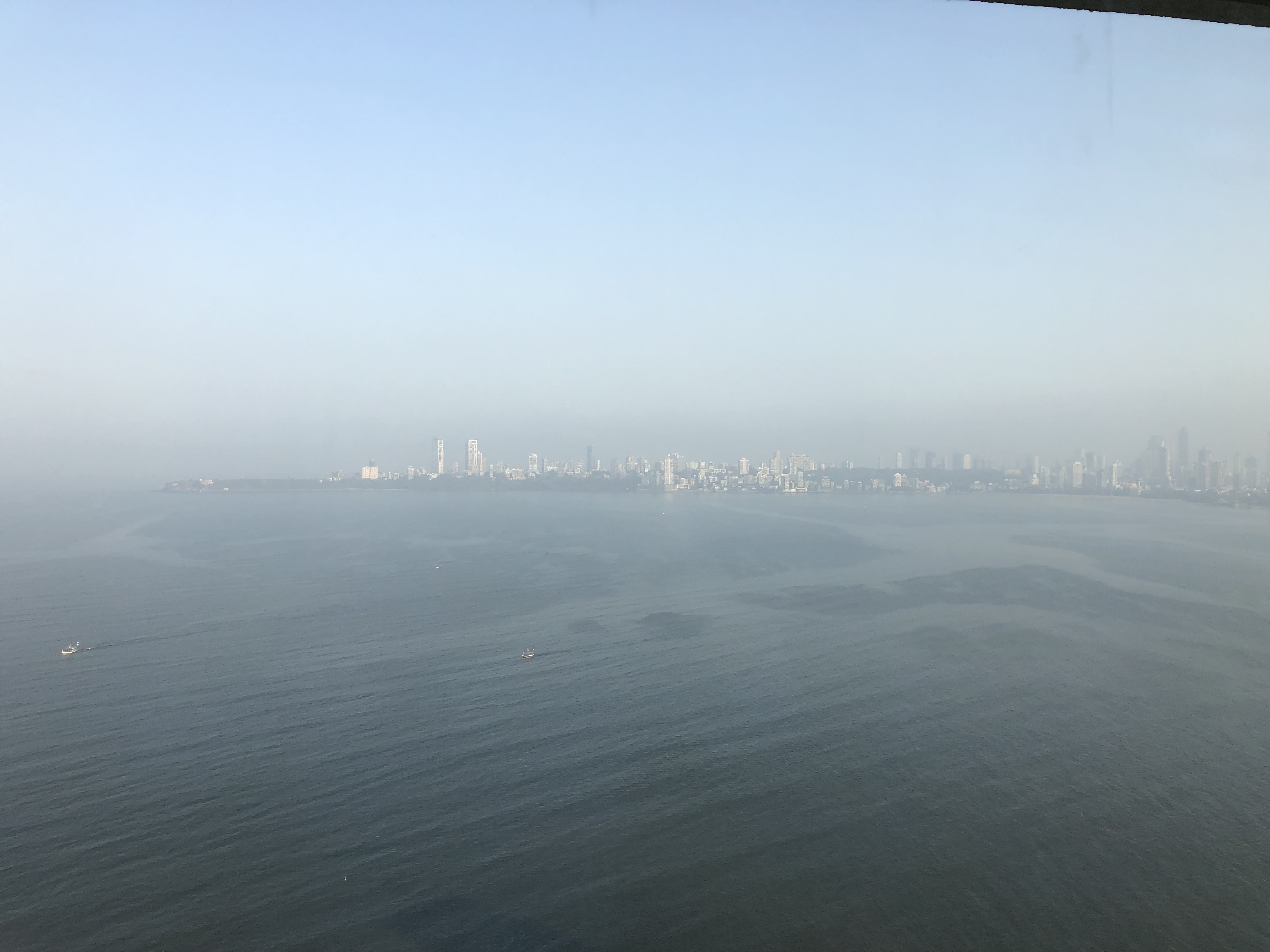
The view of Mumbai and the Arabian Sea from our room on the top floor (33rd) of the Trident/Oberoi Hotel. The specks in the foreground are traditional Indian ocean-going gaff rigged sailboats. The hotel and the neighboring Taj were the 2 hotels attacked by terrorists in 2008, along with several public spaces, etc. The consequences of that disaster are still felt today with machine-gun-carrying guards everywhere—in the hotels, shopping areas, transit areas—basically anywhere where serious damage can be done quickly. Beautiful views. Image Reply
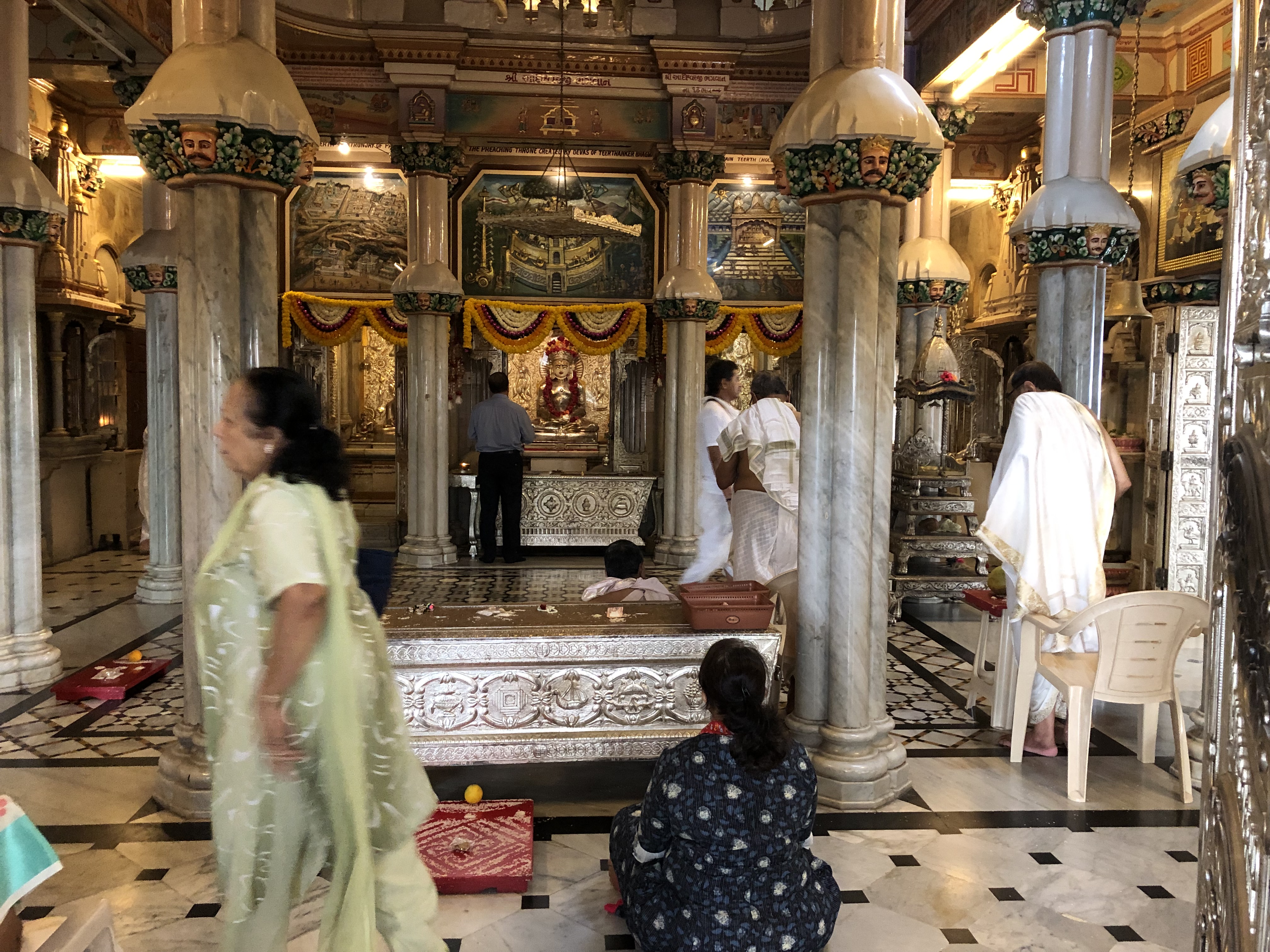
The ancient tradition of Jainism precedes Buddhism. An outgrowth of Hinduism, its central tenets hold that every living thing is sacred. Taken to its logical extension, some of the remaining orthodox worshipers hold that they cannot eat tubers (because the process of harvesting it, such as carrots or onions, could kill the germs or micro-organisms in the soil. As a result, all of the people (and more) that you see in the photos taking your shoes, selling goodies, cleaning and removing spider webs, etc., are hired Hindis. Image Reply
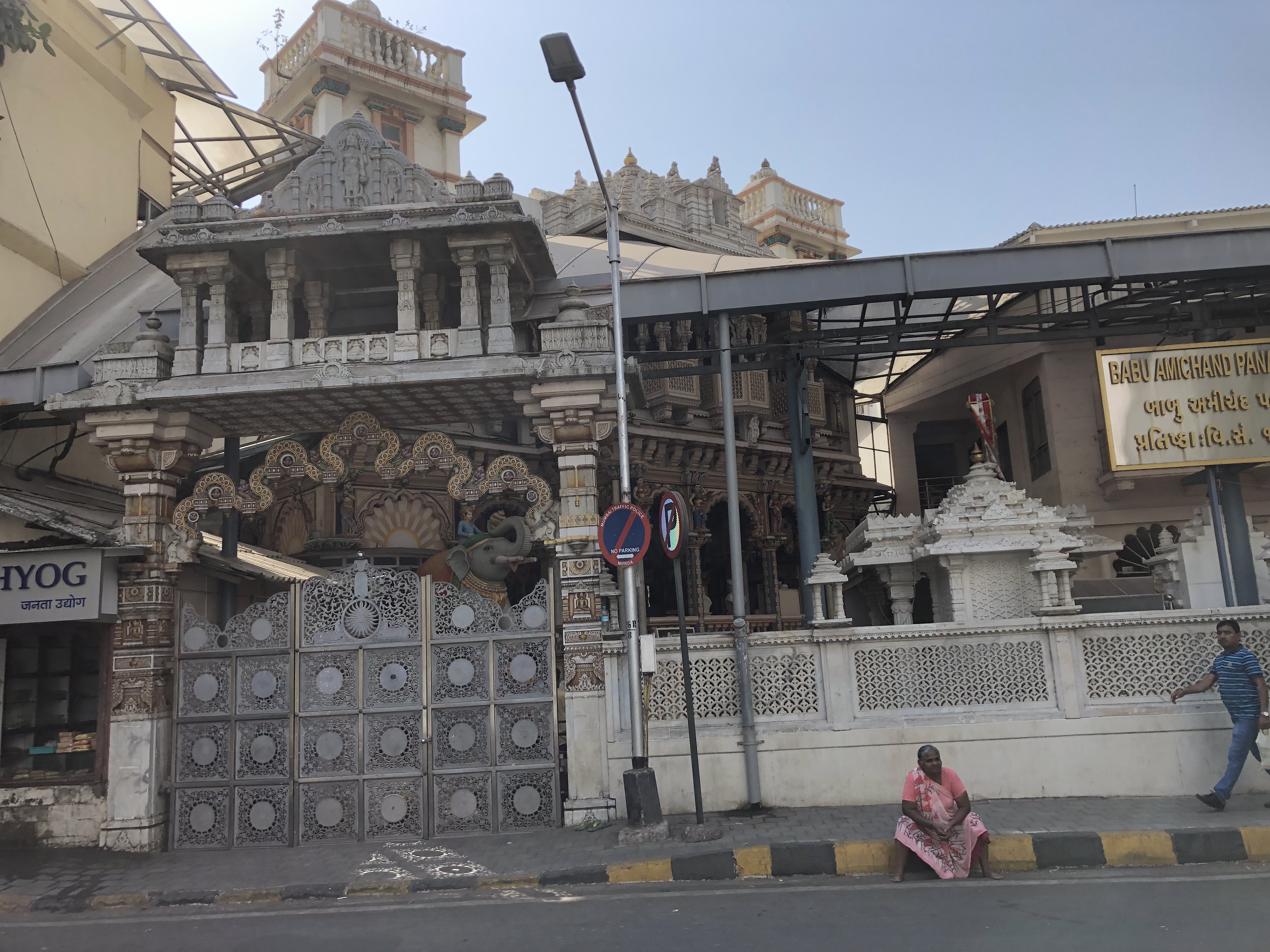
Front of the Jainism temple. While the Temple is still very much an active place of worship, the folks have recognized that the Temple is also a tourist attraction—in no small way because of the ancient and contemporary belief system(s). So as an accommodation, they allow the public to visit the site and specific interior areas without impeding into the actual worship areas. Image Reply
The courtyard at the front of the Temple. They hire Hindus to do the maintenance etc. for fear of killing something themselves. Image Reply
Scattered throughout Mumbai’s slums are an unknown number (to us at least) of the centuries old open air, beat-em clean, laundries where the cloths are washed in these huge tubs and hung out to dry. Somehow there is order to this seemingly chaotic process. People do get their laundry back. Back breaking, scorching hot, cheap labor. By noon, when we were there, washing for the day was essentially complete and they were shutting down to escape as much of the heat as possible. They start at 4-5AM. Image Reply











 thebunguycord